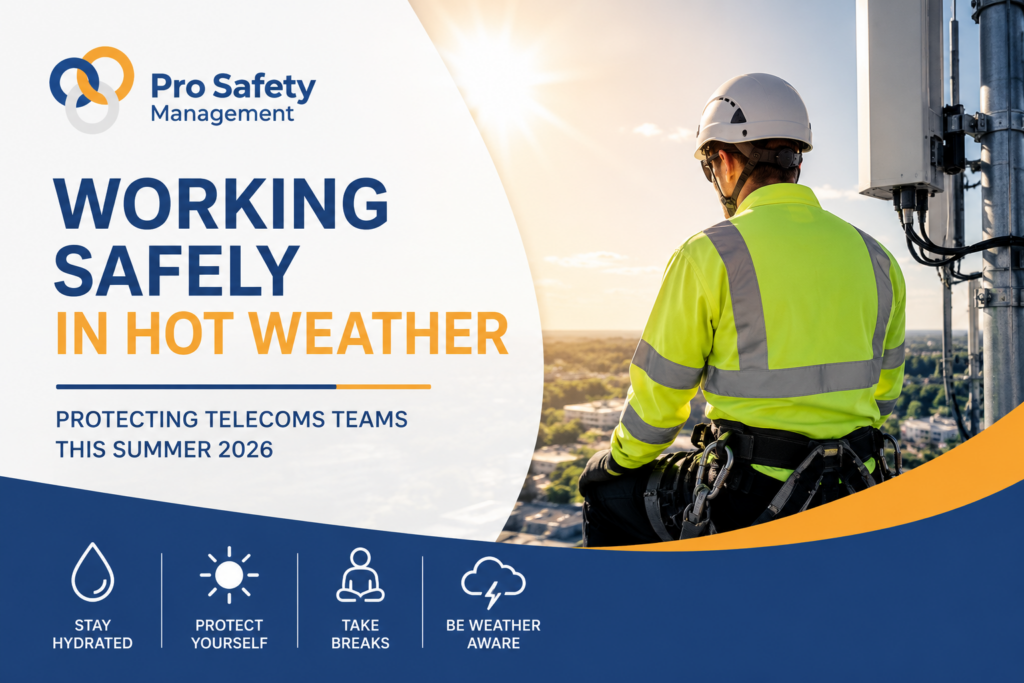
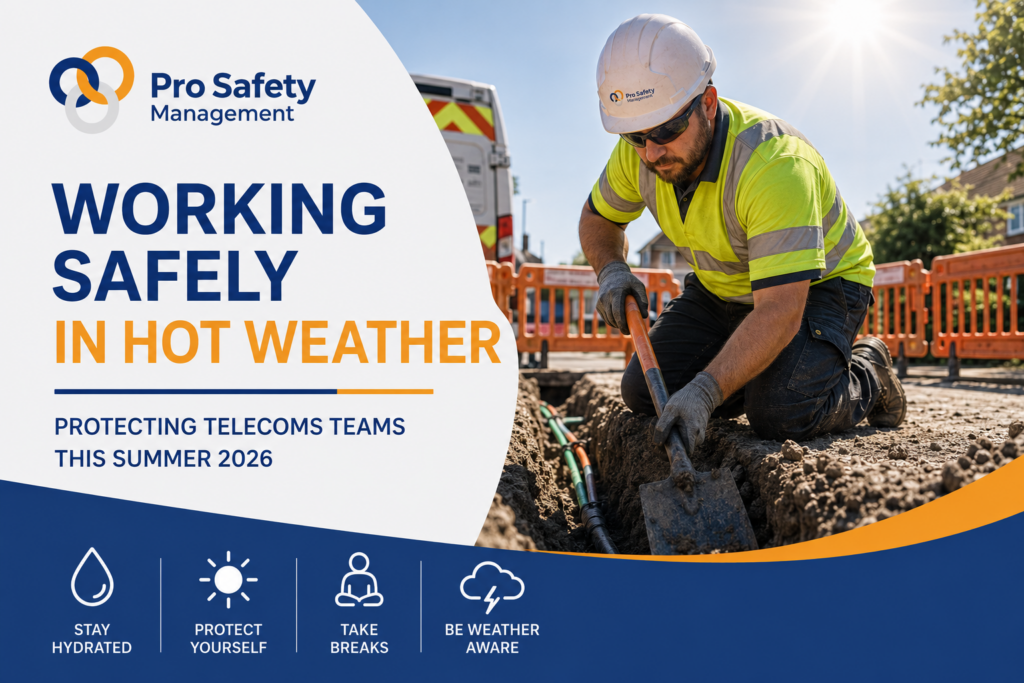
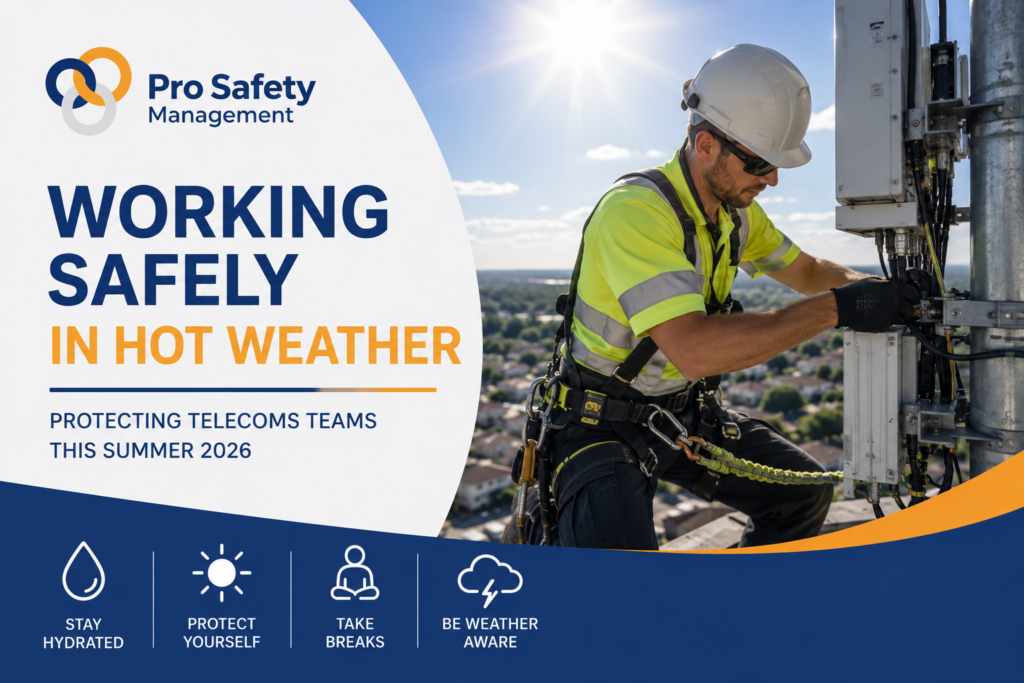
Working Safely In Hot Weather: Protecting Telecoms Teams During Summer 2026
As temperatures continue to rise across the UK, working outdoors during the summer months presents additional challenges for organisations delivering telecoms and infrastructure projects.
The Met Office has already issued a number of heat alerts during June, with temperatures exceeding 30°C in many parts of the country. Alongside extreme heat comes the increased likelihood of thunderstorms, making it even more important for organisations to review how they manage the safety of their workforce.
For businesses operating in telecommunications, utilities and other high-risk infrastructure sectors, hot weather isn’t simply an inconvenience—it introduces genuine health and safety risks that require effective planning, supervision and leadership.
At Pro Safety Management, we work with organisations across the UK to help ensure work can continue safely, whatever the conditions.
Why Hot Weather Matters
Many telecoms engineers spend prolonged periods working outdoors carrying equipment, climbing structures, undertaking civils work or travelling between sites.
High temperatures can significantly increase the risk of:
- Dehydration
- Heat exhaustion
- Heat stroke
- Reduced concentration
- Fatigue
- Poor decision making
- Increased likelihood of accidents and near misses
Heat can also affect vehicles, batteries, tools, electronic equipment and personal protective equipment, potentially impacting both productivity and safety.
Recent industry safety alerts have reminded organisations that simple preventative measures can dramatically reduce these risks.
Recognising The Warning Signs
Everyone working outdoors should understand the early symptoms of heat-related illness.
Common warning signs include:
- Excessive sweating
- Dizziness or feeling faint
- Headaches
- Muscle cramps
- Nausea
- Confusion
- Extreme tiredness
If left untreated, these symptoms can quickly develop into heat stroke, which is a medical emergency requiring immediate assistance.
No programme deadline is worth putting someone’s health at risk.
Practical Measures The Make A Difference
Managing hot weather doesn’t require complicated procedures, but it does require good planning and leadership.
Stay Hydrated
Workers should drink water regularly throughout the day rather than waiting until they feel thirsty.
Managers should ensure:
- Drinking water is readily available
- Teams are encouraged to take regular hydration breaks
- Supervisors actively remind colleagues to keep drinking
Protect Against the Sun
Direct sunlight can rapidly increase body temperature.
Simple controls include:
- Applying high SPF sunscreen
- Wearing appropriate sun protection
- Seeking shade whenever possible
- Scheduling breaks away from direct sunlight
It’s important to remember that high-visibility clothing provides no protection from UV radiation. Wearing PPE does not prevent sunburn or reduce exposure to harmful UV rays.
Review Working Hours
Where practical, consider:
- Starting work earlier
- Completing physically demanding tasks during cooler periods
- Avoiding prolonged exposure during the hottest part of the afternoon
Even small adjustments can significantly reduce heat exposure.
Monitor Your Team
Supervisors play a critical role during periods of extreme weather.
They should regularly ask:
- Has everyone had enough to drink?
- Is anyone showing signs of fatigue?
- Does anyone need additional breaks?
- Are lone workers checking in regularly?
The recent industry guidance also highlights the importance of maintaining regular contact with lone workers throughout the working day.
Don’t Forget Vehicles and Equipment
Heat doesn’t just affect people.
Vehicles parked in direct sunlight can quickly become dangerously hot.
Electronic equipment, batteries, tablets and testing equipment may also overheat, reducing reliability or causing failures.
Before travelling between sites:
- Ventilate vehicles where possible
- Use air conditioning responsibly
- Allow equipment to cool where necessary
- Store temperature-sensitive equipment correctly
Planning ahead helps prevent unnecessary delays and protects valuable assets.
Preparing for Summer Storms
Periods of extreme heat are often followed by sudden thunderstorms.
This can introduce additional hazards including:
- Lightning
- High winds
- Reduced visibility
- Slippery surfaces
- Localised flooding
Dynamic risk assessments become even more important during rapidly changing weather conditions.
If weather conditions deteriorate, supervisors should consider whether work should be paused until it is safe to continue.
Leadership Sets the Standard
Managing hot weather isn’t simply about issuing a safety bulletin.
It requires visible leadership, proactive planning and a culture where people feel comfortable speaking up if they are becoming unwell.
When managers regularly check on their teams, encourage breaks and demonstrate that safety takes priority over production, employees are far more likely to make sensible decisions themselves.
This is exactly the type of practical leadership that helps reduce incidents across high-risk industries.
How Pro Safety Management Can Help
Whether you’re managing telecoms delivery, utilities projects or wider infrastructure programmes, effective health and safety management means preparing for changing operational risks—including seasonal weather.
At Pro Safety Management, we support organisations through:
- Health & Safety consultancy
- Telecoms-specific safety management
- CDM advice and compliance
- Safety leadership training
- Risk assessments and operational reviews
- Competent Person support
- Health & Safety audits and gap analysis
Summer weather should never catch organisations by surprise. By putting sensible controls in place and empowering leaders to make safe decisions, businesses can continue delivering projects while protecting the wellbeing of their workforce.
If you’d like to review your health and safety arrangements or strengthen your organisation’s safety leadership, get in touch with the team at Pro Safety Management to discuss how we can support your business.
About Pro Safety Management
We are a Specialist Telecoms Health and Safety Consultancy with over 40+ years experience. Serving some of the global leading telecommunication companies, we provide specialist and strategic health and safety management ensuring operational standards at the highest level.
Do you want better compliance?
Hey, I’m Alex Burbidge. I’m determined to make a business health and safety compliant. My only question is, will it be yours?