Understanding CDM Regulations in Telecoms Projects
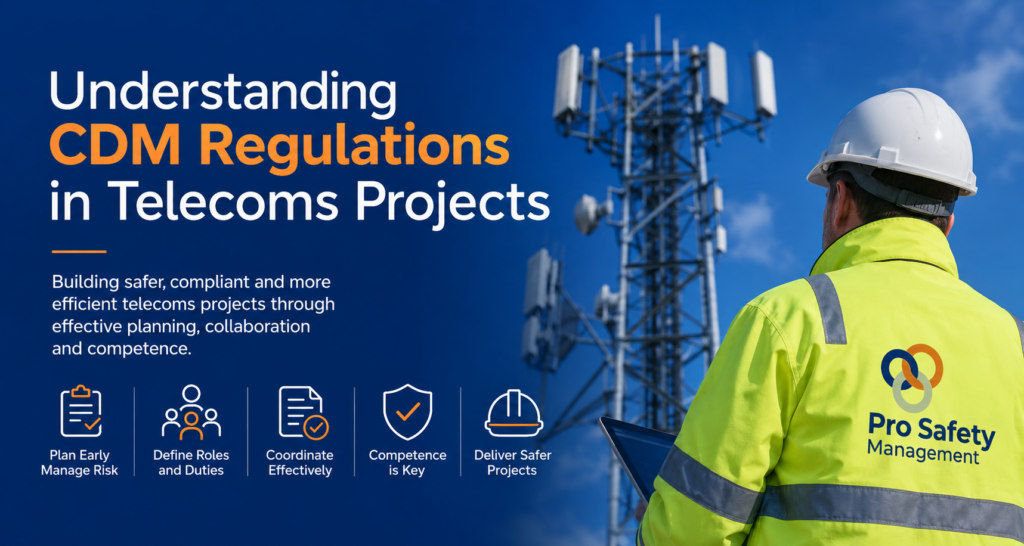
The Construction (Design and Management) Regulations 2015 (CDM) are a cornerstone of health and safety management across construction-related activities in the UK. While many people associate CDM with large-scale building projects, the regulations are equally relevant to the telecommunications sector. For telecoms organisations, understanding how CDM applies is critical, yet it remains an area where significant knowledge gaps continue to exist.
Many telecoms projects fall within the scope of CDM, even if they are not traditionally viewed as “construction” activities. Works such as mast installations, rooftop equipment upgrades, structural modifications, network infrastructure deployments, fibre rollouts and equipment replacements can all meet the legal definition of construction work under the regulations. As the telecoms industry continues to expand and evolve to support growing connectivity demands, the need for competent CDM management has never been greater.
Where do the legal duties lie?
CDM places legal duties on a range of stakeholders, including clients, designers, principal designers, principal contractors and contractors. Each role carries specific responsibilities and failure to fulfil these duties can result in enforcement action, project delays, reputational damage and significant financial penalties.
One of the fundamental principles of CDM is that health and safety must be considered from the earliest stages of a project. This is particularly important during the design phase, where decisions can have a lasting impact on how safely a project can be delivered, maintained and ultimately decommissioned. For example, designing out the need for working at height, incorporating safer access arrangements or reducing the need for future maintenance interventions can significantly lower risk throughout the asset’s lifecycle.
Shift Your Mindset
For many telecoms organisations, this requires a shift in mindset. Historically, safety has often been viewed as something that happens on-site, managed by operational teams once work begins. CDM challenges this approach by requiring organisations to embed health and safety considerations into planning, design, procurement and project management activities from day one.
Skills & Knowledge Gap
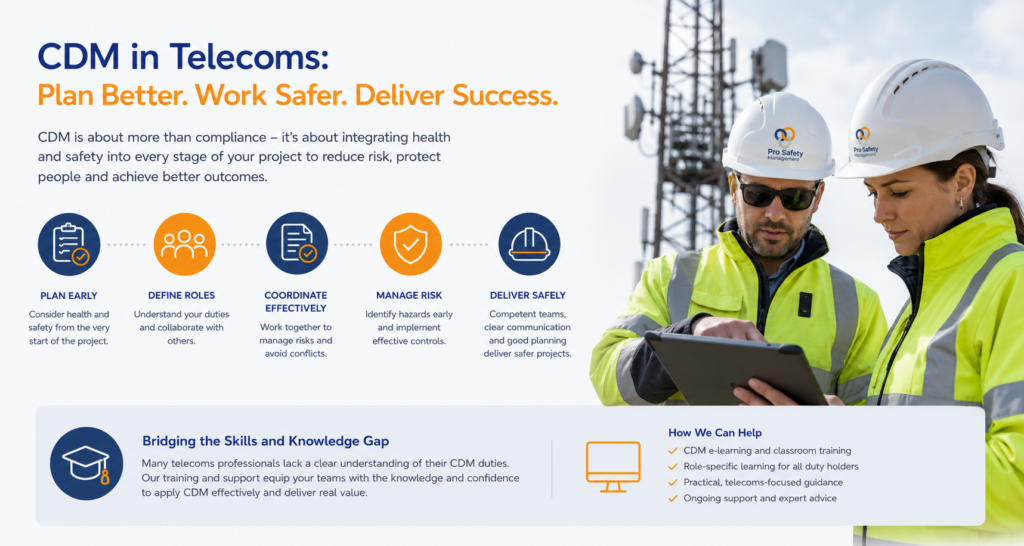
Despite the importance of CDM, the industry continues to face a skills and knowledge gap. Many professionals involved in telecoms projects understand operational safety requirements but may have limited awareness of their specific legal duties under CDM. Designers are often unaware of the extent of their responsibilities, clients may not fully understand their obligations to appoint competent duty holders and contractors can struggle to interpret how CDM requirements apply to non-traditional construction environments.
This lack of understanding can lead to poor coordination, inadequate planning and missed opportunities to eliminate risks before work reaches site. As telecoms networks become more complex and project delivery models involve multiple organisations working together, competence in CDM is becoming an increasingly important business requirement rather than simply a compliance exercise.
Where Training Comes In
Training plays a crucial role in addressing these challenges. Effective CDM training helps individuals understand not only their own responsibilities but also how their role interacts with others throughout the project lifecycle. When teams understand their duties and the wider CDM framework, communication improves, risks are identified earlier and projects are delivered more efficiently.
Another critical aspect of CDM is coordination. Telecoms projects frequently involve multiple contractors, designers and specialist suppliers working simultaneously or in sequence. Without effective coordination, there is a risk of conflicting activities, duplicated effort, unclear responsibilities and gaps in safety management. Strong leadership and clear communication are essential to ensuring that everyone understands their role and that risks are managed collectively.
Documentation Is Key
Documentation also plays a vital role. Construction phase plans, risk assessments, method statements and health and safety files are often viewed as administrative requirements, but they are far more than paperwork. When developed correctly, these documents provide a structured approach to identifying hazards, communicating controls and maintaining a clear record of safety decisions throughout the project.
How We Can Help
At Pro Safety Management, we recognise that many organisations require practical, industry-specific support to navigate CDM effectively. We provide tailored CDM training, consultancy and competence development programmes designed specifically for telecoms and wider construction environments. Our approach focuses on making CDM understandable, relevant and applicable to real-world projects, helping organisations bridge knowledge gaps and build confidence across all duty holder roles.
By investing in competence and understanding, organisations can move beyond simply meeting legal requirements. They can create safer working environments, improve project outcomes and strengthen collaboration across their supply chains.
When implemented effectively, CDM is not just about compliance – it is about delivering safer, more efficient and more successful projects while developing the skills and knowledge needed to support the future of the telecoms industry.
For more information about our CDM for Telecoms e-learning course, consultancy services or wider competence development programmes, contact us at hello@prosafetymanagement.co.uk, call 0330 2235911, or complete the enquiry form below and a member of our team will be happy to help.
About Pro Safety Management
We are a Specialist Telecoms Health and Safety Consultancy with over 40+ years experience. Serving some of the global leading telecommunication companies, we provide specialist and strategic health and safety management ensuring operational standards at the highest level.