The Risk Register: From Tick Box To Strategic Tool
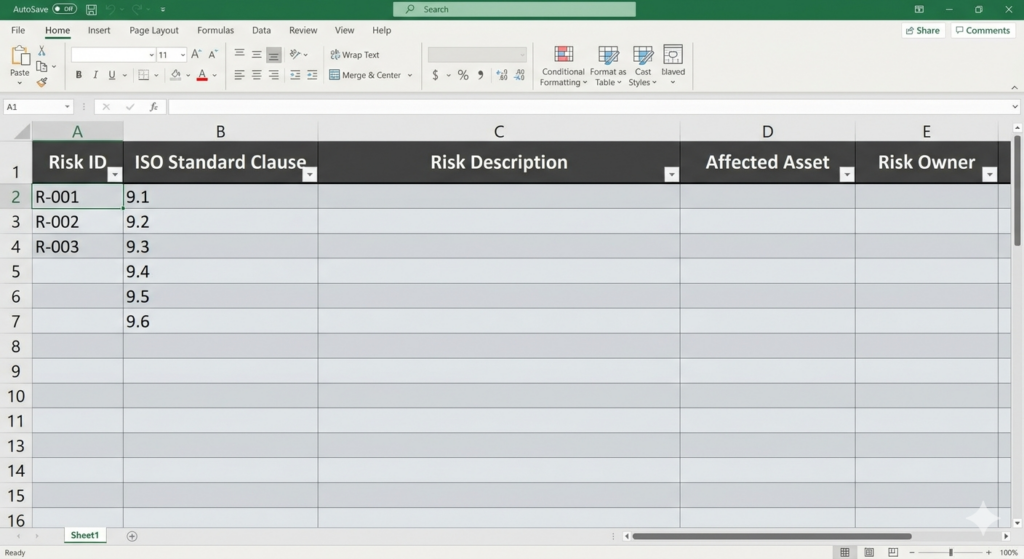
Across ISO management systems, whether it be ISO 9001, ISO 14001 or ISO 45001 – the concept of risk is central. Yet one of the most commonly misunderstood and underutilised tools remains the risk register.
Too often, it becomes a static document created for compliance, rather than a living framework that actively supports decision-making, performance and continual improvement.
So what makes a risk register effective, and where do organisations typically go wrong?
Understanding The Foundations
At its core, a risk register is about structured thinking. It is not just a list of hazards or issues; it is a systematic way to:
Identify risks and opportunities
Assess their significance
Implement controls
Monitor effectiveness
ISO standards are deliberately flexible. They don’t prescribe exactly how a risk register should look, but they do expect organisations to demonstrate that risk-based thinking is embedded into operations.
The foundation, therefore, is not the template – it’s the intent.
A strong risk register answers three key questions:
What could happen?
What would the impact be?
What are we doing about it?
If those answers are unclear, the register isn’t doing its job.
The Detail Dilemma - Too Much Vs Too Little
One of the biggest challenges is finding the right level of detail.
When It’s Too Generic
A generic risk register often includes vague entries like:
“Environmental impact”
“Health and safety risk”
“Compliance failure”
While these may tick a box, they lack clarity and are difficult to act upon. The consequences include:
Poor ownership (no one knows who is responsible)
Ineffective controls (actions are not targeted)
Limited value during audits or reviews
In short, a generic register rarely drives improvement, it simply documents intent.
When It’s Too Detailed
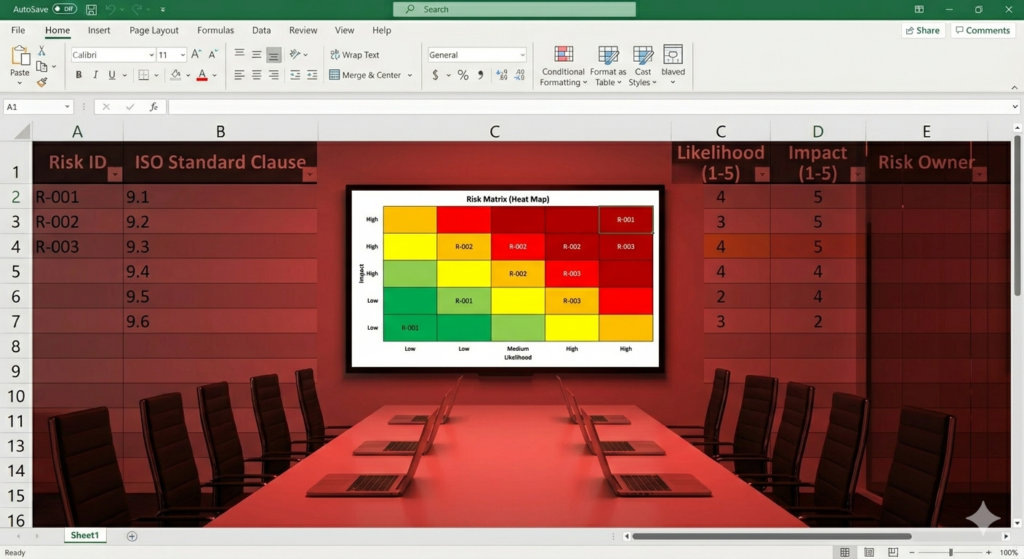
On the other hand, overly detailed registers can become unmanageable. Hundreds of micro-risks, excessive scoring criteria and complex matrices can:
Overwhelm teams
Reduce engagement
Make updates infrequent or inconsistent
The risk here is that the register becomes a burden rather than a tool.
Finding the Balance
The most effective risk registers strike a balance:
Specific enough to be actionable
Structured enough to be consistent
Simple enough to be maintained
A good test is this: can a team member understand the risk and the required control within seconds? If not, it needs refining.
Environmental Aspects & Impacts - A Critical Link
Within ISO 14001, the concept of environmental aspects and impacts is closely aligned with risk registers – but they are often treated separately.
This is a missed opportunity.
Environmental aspects (what you interact with) and impacts (the effect of that interaction) should feed directly into your risk register. For example:
By integrating aspects and impacts into the risk register, organisations can:
Prioritise significant environmental risks
Align operational controls with environmental objectives
Demonstrate a clear link between activities and outcomes
Without this integration, environmental management can become fragmented, reducing its effectiveness.
Common Issues We See
Across industries, several recurring challenges emerge:
Static documents: Registers are created once and not reviewed regularly
Lack of ownership: Risks are not assigned to accountable individuals
Poor linkage: Disconnect between risks, objectives, and operational controls
Inconsistent scoring: Risk ratings that are subjective or unclear
Audit-driven thinking: Registers updated only in preparation for audits
These issues limit the value of the risk register and undermine the intent of ISO standards.
The Ideal Outcome: A Strategic Risk Register
When implemented effectively, a risk register becomes far more than a compliance tool, it becomes a strategic asset.
At Pro Safety Management, we position risk registers to:
Drive continual improvement
Integrate quality, safety, and environmental considerations
Provide clear evidence of risk-based thinking
Engage teams at all levels
Support informed decision-making
The ideal outcome is a living system where:
Risks are reviewed as part of normal operations
Controls are actively monitored and improved
Environmental aspects and impacts are fully embedded
Leadership has clear visibility of organisational risk
Working With Us
Our approach is practical and tailored. We don’t just create documents – we help organisations build systems that work in the real world.
By working with Pro Safety Management, clients can expect:
·Clear, structured risk registers aligned to ISO standards
·Integration of environmental aspects and impacts
·Right-sized levels of detail – no unnecessary complexity
·Improved engagement from operational teams
·Confidence during audits and inspections
Most importantly, we help turn risk management from a requirement into a competitive advantage.
For any and all ISO requirements your organisation has, please give us a call and book your free consultation and we will be more than happy to see how we can help your business.
About Pro Safety Management
We are a Specialist Telecoms Health and Safety Consultancy with over 40+ years experience. Serving some of the global leading telecommunication companies, we provide specialist and strategic health and safety management ensuring operational standards at the highest level.