Why Buddy Checks Are the Most Important Minute Before Working at Height

Working at height remains one of the highest-risk activities across construction, utilities, telecommunications, facilities management, and industrial environments. While organisations invest heavily in quality fall protection equipment, training, and safe systems of work, one of the simplest yet most effective safety controls often takes less than a minute to complete—the buddy check.

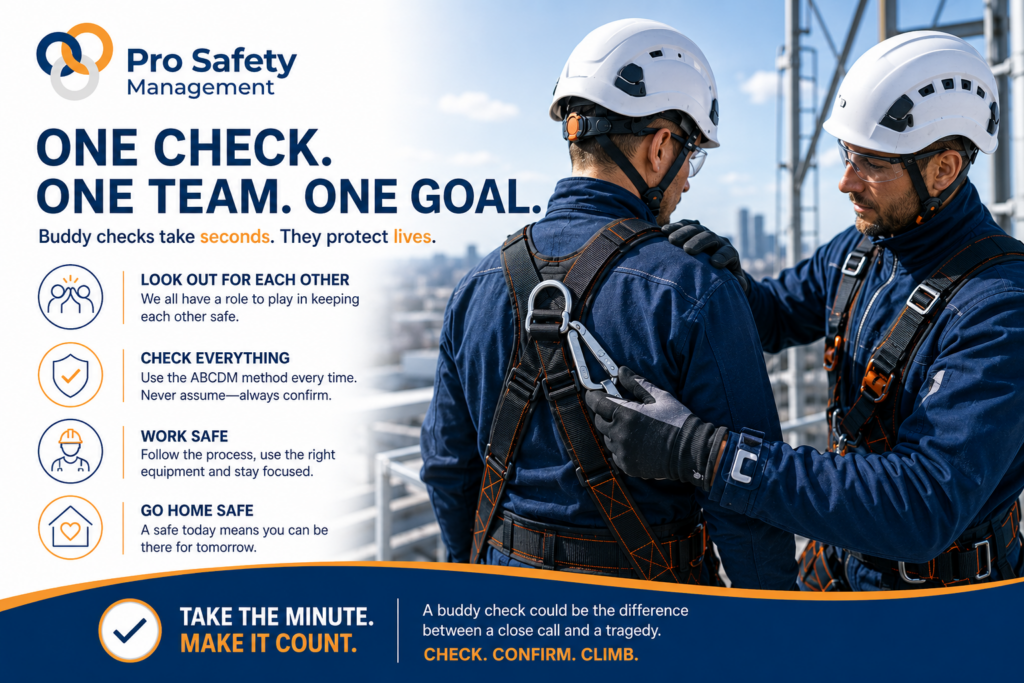
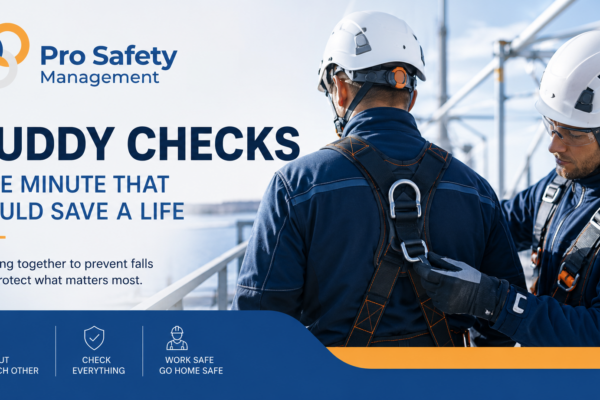
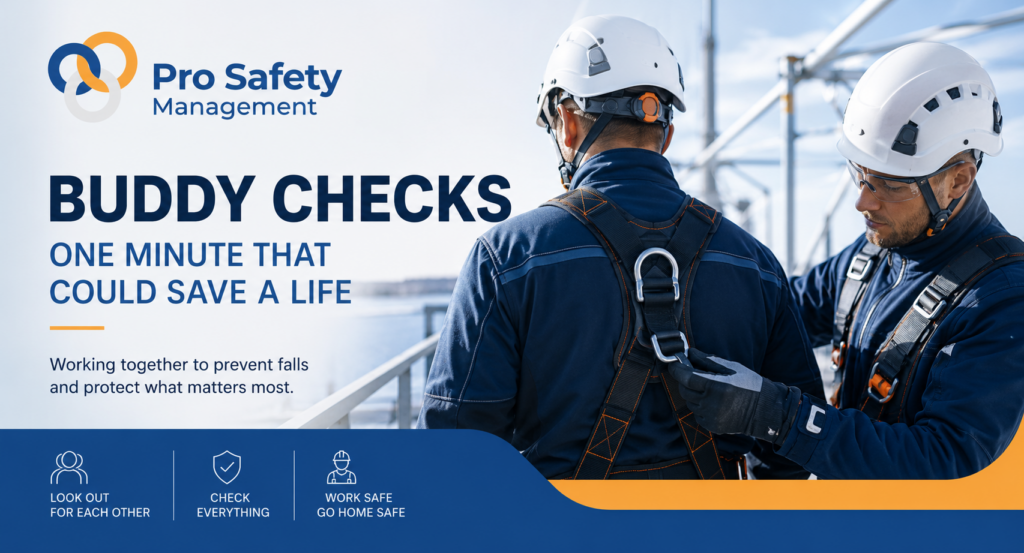
A buddy check is a mandatory safety practice where two workers inspect each other’s fall protection equipment before beginning work at height. It provides a vital final line of defence against equipment failure, incorrect fitting, and simple human error.

Even experienced workers can overlook something when preparing for a task. Fatigue, distractions, routine, and time pressures can all contribute to mistakes that may have serious consequences. A second pair of eyes can identify issues that the wearer may not notice, helping prevent incidents before they happen.

Why Buddy Checks Matter

Falls from height continue to be one of the leading causes of serious injuries and fatalities in the workplace. In many cases, investigations reveal that the equipment itself wasn’t faulty—it simply wasn’t fitted or connected correctly.

Something as small as a twisted harness strap, an unsecured chest buckle, an unlocked connector, or an incorrectly positioned D-ring can significantly reduce the effectiveness of fall protection equipment.

Buddy checks create an opportunity to pause, slow down, and verify that everything is correct before leaving the ground.

They also reinforce a positive safety culture where colleagues take responsibility not only for their own safety but for each other’s wellbeing.

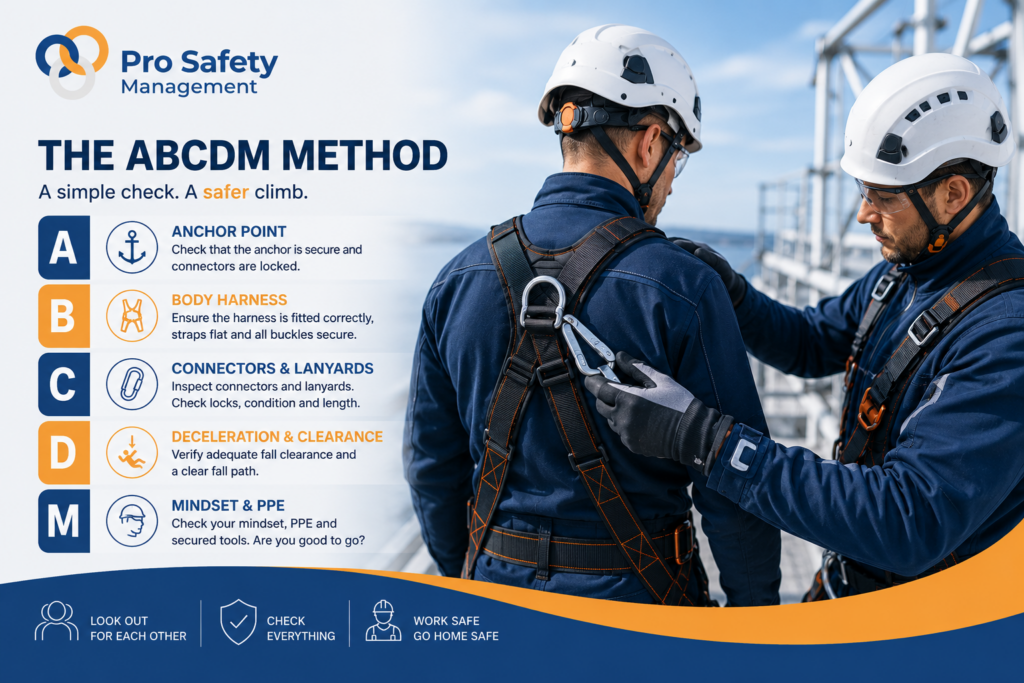
The ABCDM Buddy Check Method

A simple way to remember the essential inspection points is the ABCDM method.

A – Anchor Point

Every fall protection system is only as strong as its anchor.

During the check, ensure the structural anchor point is suitable, secure, and capable of supporting the required load. Inspect any connectors to confirm that gates are fully closed and locked before use.

B – Body Harness

The harness is your last line of personal protection, so correct fitting is essential.

Check that:

  • Straps are flat, untwisted, and comfortably snug.
  • The chest strap is positioned at mid-chest level.
  • The dorsal D-ring sits centrally between the shoulder blades.
  • Loose strap ends are securely tucked away to prevent snagging.

A poorly adjusted harness may not perform as intended during a fall and could increase the risk of injury.

C – Connectors and Lanyards

Inspect all connectors and lanyards carefully.

Look for signs that an energy absorber has deployed or suffered damage, including tears or stretching. Test hooks and carabiners to ensure locking mechanisms operate correctly and close automatically.

Finally, confirm that the lanyard length is appropriate for the working environment and the available fall clearance.

D – Deceleration and Clearance

Before work begins, verify that the calculated fall clearance exceeds the potential fall distance.

Ensure there are no obstacles, machinery, structures, or other hazards within the fall path that could cause secondary injuries should a fall occur.

Understanding your clearance requirements is just as important as wearing the correct equipment.

M – Mindset and PPE

Safe working isn’t just about equipment—it also depends on the person using it.

Confirm that:

  • Safety helmet chin straps are securely fastened.
  • Tools are attached using suitable tool lanyards to prevent dropped objects.
  • Both workers feel alert, focused, and physically fit to work at height.

If someone is tired, distracted, or feeling unwell, it’s better to address the issue before climbing rather than risk an incident.
How to Carry Out an Effective Buddy Check

A thorough buddy check takes only a few moments but should never be rushed.

Stand face-to-face

Position yourself directly in front of your colleague to gain a clear view of the harness and equipment.

Physically touch the equipment

Don’t rely on visual inspection alone. Physically check buckles, D-rings, connectors, and hooks to confirm they are correctly engaged and locked.

Trace the safety system

Follow the entire fall protection system from the harness attachment point through the lanyard and connectors all the way to the anchor point. This helps identify incorrect routing, poor connections, or missed attachments.

Talk through each check

Clearly verbalise each inspection point.

Simple confirmations such as “Chest buckle secure,” “Connector locked,” or “Anchor confirmed” ensure both workers understand what has been checked and reduce assumptions.

Building A Safer Work Culture

Buddy checks are about far more than compliance—they demonstrate teamwork, professionalism, and genuine care for one another.

When every person commits to checking their colleague before climbing, the likelihood of preventable mistakes is dramatically reduced.

Safety isn’t just about having the right equipment; it’s about using it correctly every single time.

Taking sixty seconds to complete a buddy check could prevent a life-changing injury—or even save a life.

Before anyone leaves the ground, remember the ABCDM method and make buddy checks part of every work-at-height routine. Because when it comes to safety, everyone deserves someone checking they’ve got it right.

Ready to strengthen Health & Safety within your organisation?

Whether you’re looking to improve leadership, develop your management team, review your existing Health & Safety arrangements or discuss a specific challenge, we’re here to help.