The Principal Designer: Why The Role Fails & Why It Matters
The Principal Designer role should be one of the most influential positions in construction health and safety. Too often, it isn’t.
On paper, the logic is straightforward. Many of the most serious risks on a construction project are not created when somebody arrives on site with a tool in their hand. They are created much earlier, through decisions about layout, access, materials, sequencing, maintenance, temporary works and how the finished building will eventually be used.
That is why the Principal Designer matters.
Yet on too many projects, the role has become something very different: a name on an appointment letter, a few design risk registers, attendance at occasional meetings and a folder of documents produced to demonstrate that somebody has “done CDM”.
That is where it fails.
The problem starts with how the role is understood
Under CDM 2015, the Principal Designer is responsible for planning, managing, monitoring and coordinating health and safety during the pre-construction phase.
Those words matter.
The role is not simply to collect designers’ risk assessments. It is not to produce paperwork on behalf of the client. And it certainly is not to become the project’s administrative dumping ground for anything containing the words “health and safety”.
The Principal Designer should be influencing how risk is dealt with through design.
That means asking difficult questions early enough for the answers to make a difference.
Can this component be installed safely?
How will the façade be maintained in ten years?
Are we designing a permanent requirement for work at height that could be eliminated now?
Can heavy components be replaced without exposing future workers to unnecessary lifting risks?
Does the construction sequence introduce hazards that another design approach could remove?
These are design questions with health and safety consequences. They cannot be solved effectively by adding another line to a risk register.
Why does the role fail?
One reason is late appointment.
If the Principal Designer arrives after the important design decisions have already been made, their ability to influence risk is dramatically reduced. They are left reviewing decisions rather than shaping them.
Another is lack of authority.
A Principal Designer can identify an issue, but if the project culture treats programme, aesthetics and cost as fixed while safety is something to be “managed around them”, meaningful design risk management becomes extremely difficult.
Then there is competence.
The role requires more than knowledge of CDM terminology. It requires an understanding of design processes, construction methods and risk, combined with the confidence to challenge architects, engineers, specialists, clients and contractors.
There is also a more uncomfortable problem: paperwork can create the appearance of compliance.
A project can have beautifully formatted registers, meeting minutes and hazard schedules while fundamental risks remain embedded in the design.
Documentation has value. But documentation is evidence of a process; it is not the purpose of the process.
Building Regulations have raised the stakes
The Building Safety Act and changes to the Building Regulations have also made the distinction between different Principal Designer duties increasingly important.
The CDM Principal Designer role is concerned with health and safety during the pre-construction phase under CDM 2015. The Building Regulations Principal Designer has separate duties concerned with ensuring that design work complies with the Building Regulations.
The same organisation may perform both roles, but they should not simply be treated as interchangeable titles.
That changing regulatory landscape makes competence, clarity of appointment and effective coordination even more important.
Why the Principal Designer still matters
Despite its weaknesses in practice, the principle behind the role is powerful.
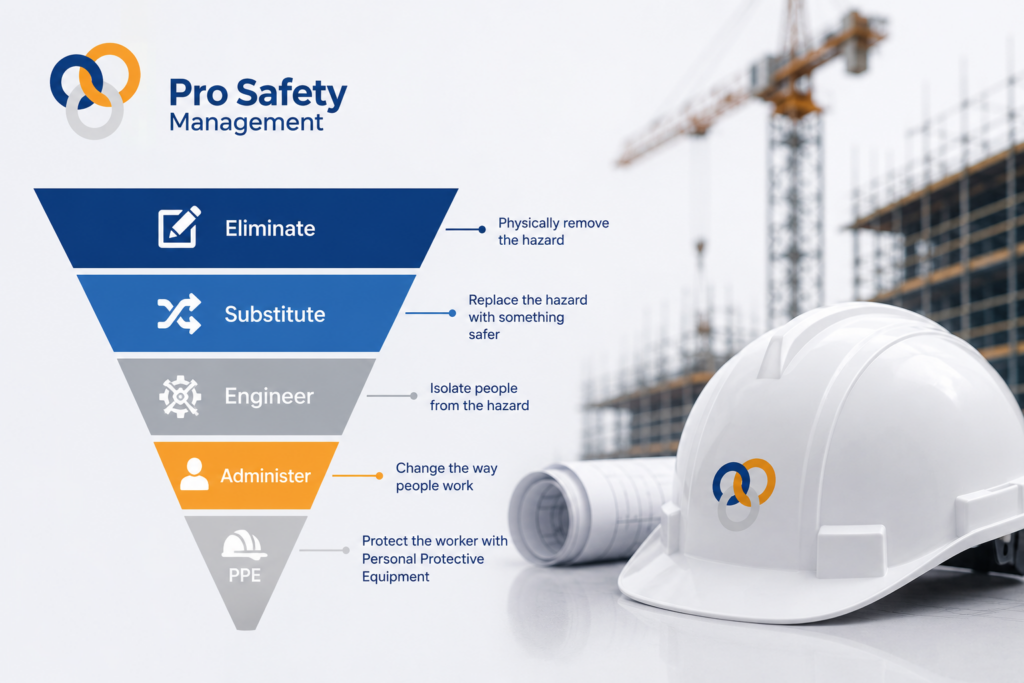
The cheapest, safest and most effective hazard to manage on a construction site is often the one that never reaches the site at all.
A designer who eliminates a fragile rooflight removes years of future exposure.
A design team that provides safe permanent access for maintenance can protect people long after the construction team has left.
A project that considers lifting, installation and sequencing during design can avoid relying on method statements and human behaviour to control risks that could have been engineered out.
That is prevention rather than administration. And that is where the Principal Designer should sit: upstream, where decisions are still changeable.
The industry does not need Principal Designers who simply record risk. It needs Principal Designers who influence design. Because the real test of the role is not how complete the CDM folder looks at handover. It is how many foreseeable risks never had to be managed on site in the first place.
How Pro Safety Management Can Help
At Pro Safety Management, we help clients make the Principal Designer role more than a compliance exercise. By getting involved early, challenging foreseeable risks and working collaboratively with clients, designers and contractors, we help ensure health and safety is considered where it can have the greatest impact, at the design stage.
Whether you need support with CDM Principal Designer duties, design risk management, pre-construction information or wider CDM compliance, our focus is practical: helping you reduce risk, demonstrate compliance and deliver safer projects from concept through to completion.
If you have an upcoming project and want to strengthen your approach to Principal Designer duties, please get in touch.
Ready to strengthen Health & Safety within your organisation?
Whether you’re looking to improve leadership, develop your management team, review your existing Health & Safety arrangements or discuss a specific challenge, we’re here to help.